
The Silent Revolution: Mapping Pakistan’s Decentralized Solar Boom
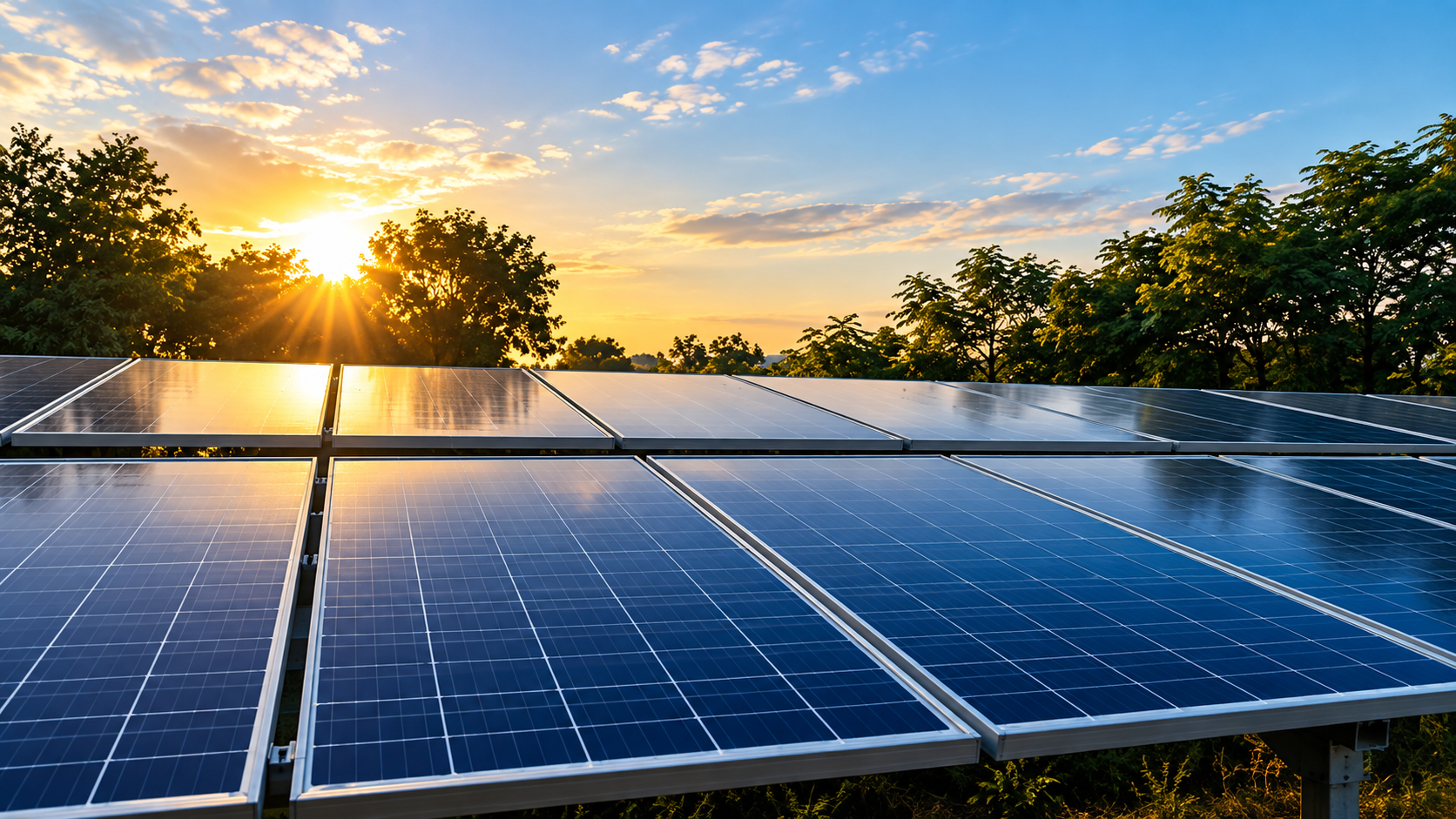
Over the last few years, Pakistan has undergone one of the fastest and most unprecedented transitions to clean energy in developing history. Driven by skyrocketing grid electricity prices and a dramatic crash in global photovoltaic (PV) panel costs, the country added an astonishing 27 GW of distributed solar capacity between 2023 and 2025.
What makes this boom unique is its democratic, consumer-led nature. Rather than waiting for utility-scale government projects, everyday citizens, businesses, and farmers took matters into their own hands. Today, distributed solar accounts for roughly 28% of the country’s electricity mix. However, official grid data only tells part of the story. A massive portion of this capacity operates entirely off-grid or “behind-the-meter,” serving areas completely disconnected from the state network.
Province-Wide Landscape: How the Sun Powers Pakistan
While data on off-grid and unregistered rooftop systems is notoriously difficult to measure due to informal trade networks, cumulative market insight and geographic energy realities provide a clear province-by-province breakdown.
1. Punjab: The Agricultural & Commercial Heavyweight
As the most populated province, Punjab dominates the raw volume of solar adoption.
- The Drivers: Industrial units, urban residential rooftops (Lahore, Faisalabad, Multan), and a massive agricultural shift.
- Off-Grid Footprint: Punjab is home to an estimated 1.5 to 2 million agricultural tube wells (groundwater pumps). Previously, 80% ran on expensive, imported diesel. In a monumental structural shift, over half of these tube wells are transitioning to off-grid solar power, adding upwards of 5.6 GW to 7.5 GW of localized capacity.
2. Sindh: Urban Offsetting and Rural Solar Homes
Sindh features a sharp contrast between its highly urbanized capital, Karachi, and its vast, underdeveloped rural interior.
- The Drivers: In Karachi, commercial hubs and high-income residential areas have blanketed rooftops with panels to offset grid tariffs.
- Off-Grid Footprint: According to energy data, grid access in rural Sindh hovers around just 77.6%. In these unserved pockets, the Sindh Solar Energy Project (aided by the World Bank) and private informal markets have deployed over 1 GW to 1.7 GW of stand-alone solar home systems, giving thousands of families daytime electricity for the first time.
3. Balochistan: Absolute Grid Defection
Balochistan presents a unique case where off-grid solar isn’t a luxury, it is an absolute necessity.
- The Drivers: Infrastructure in Pakistan’s largest province by landmass is severely limited; grid accessibility sits at a meager 54.7%.
- Off-Grid Footprint: Due to acute power shortages and massive geographic distances between settlements, community-built, entirely off-grid infrastructure has thrived here. Entire villages and decentralized agricultural setups operate on stand-alone localized solar networks, fully defecting from the national grid.
4. Khyber Pakhtunkhwa (KP): Micro-Grids and Rough Terrain
KP’s mountainous terrain makes expanding traditional grid infrastructure economically unfeasible for remote northern valleys.
- The Drivers: The provincial focus has heavily leaned on decentralized community micro-grids.
- Off-Grid Footprint: Hundreds of small-scale, off-grid solar-plus-storage setups power rural clinics, schools, and mountain villages, creating localized energy self-sufficiency independent of federal supply chains.
Critical Issues Faced by Rooftop and Off-Grid Solar Owners
Despite the undeniable success of this green boom, solar owners find themselves navigating a highly volatile regulatory and operational landscape. The rapid shift has sparked friction between private consumers and state institutions.
1. The Death of 1:1 Net Metering (The Prosumer Regulations)
The biggest shock to grid-tied rooftop solar owners came via regulatory changes. National Electric Power Regulatory Authority (NEPRA) officially replaced the decade-old 1:1 Net Metering framework with a Net Billing system.
- The Problem: Previously, if an owner exported 1 unit of solar electricity to the grid, they could offset 1 unit of grid electricity at retail price (upwards of Rs. 40–60/kWh). Under the new regime, DISCOs (Distribution Companies) buy excess solar energy at a wholesale rate of only Rs. 11–13/kWh.
- The Backlash: While intense public pressure forced NEPRA to honor existing 7-year contracts until expiry, all new solar owners face significantly slashed export returns, pushing the financial value away from “selling to the grid” and forcing a heavy reliance on immediate daytime self-consumption.
2. The Battery Dependency and High Import Duties
Because the grid is buying back excess solar power at half its previous value, solar owners must now pivot to solar-plus-storage systems to save electricity for nighttime use.
- The Problem: While solar panels entered the country with duty exemptions, the government has maintained heavy taxes and import duties on lithium-ion batteries. This makes high-quality energy storage systems financially restrictive for the average middle-class household.
3. Grid Instability and Forced Inverter Tripping
For rooftop owners who remain tied to the national network, the grid itself has become a bottleneck.
- The Problem: Pakistan’s aging transmission lines struggle to cope with high voltages when thousands of residential solar systems push power back into local transformers on sunny afternoons. To protect the infrastructure, local DISCOs often suffer localized grid instability, which causes smart solar inverters to automatically trip and shut down, cutting off both generation and export.
4. Policy Contradictions and Market Uncertainty
Solar owners are caught in the crossfire of clashing provincial and federal agendas. While provincial governments (like Punjab and Sindh) actively distribute subsidized solar panels to low-income families to reduce poverty, the federal government faces immense pressure to curb “grid defection.” Because affluent consumers are leaving the grid, the state’s fixed “capacity payments” to older power plants are being shifted onto poorer, non-solar consumers, creating an unsustainable economic loop and constant threats of new solar taxation.
The Path Forward: Maximizing the Investment
For anyone navigating the solar space, the economic reality has fundamentally changed. The era of building massive, oversized solar arrays purely to wipe out an electricity bill through grid exports is over.
The most financially viable strategy is impeccable system sizing. Modern installations must be precision-tailored to mirror actual daytime loads (running heavy appliances, water pumps, and air conditioning peak-day), alongside utilizing battery storage to cushion nighttime usage. Despite policy hurdles, the falling price of global hardware keeps the average payback period stable at 3.5 to 4.5 years, ensuring that Pakistan’s decentralized solar revolution will continue to shine. To better understand the structural challenges that prompted these massive policy changes, you can check out this detailed breakdown: Pakistan Ends Net Metering? Solar Owners Shocked by NEPRA Policy. This video features energy transition experts discussing why the state shifted away from traditional net metering and how it impacts rooftop investments.
Sources:
National Electric Power Regulatory Authority (NEPRA)
https://nepra.org.pkNEPRA – State of Industry Report
https://nepra.org.pk/publications.htmPower Information Technology Company (PITC)
https://www.pitc.com.pkPakistan Economic Survey – Ministry of Finance
https://www.finance.gov.pk/survey_2425.htmlPakistan Bureau of Statistics (PBS)
https://www.pbs.gov.pkFederal Board of Revenue (Pakistan Customs)
https://www.fbr.gov.pkState Bank of Pakistan
https://www.sbp.org.pkPrivate Power and Infrastructure Board (PPIB)
https://www.ppib.gov.pkCentral Power Purchasing Agency–Guarantee (CPPA-G)
https://www.cppa.gov.pkNational Transmission & Dispatch Company (NTDC)
https://www.ntdc.com.pkInternational Energy Agency (IEA)
https://www.iea.orgInternational Renewable Energy Agency (IRENA)
https://www.irena.orgWorld Bank – Pakistan Energy Sector
https://www.worldbank.org/en/country/pakistanAsian Development Bank – Pakistan Energy
https://www.adb.org/countries/pakistan/mainEmber – Pakistan Electricity Review
https://ember-energy.orgPolicy Research Institute for Equitable Development (PRIED) – Shouting from the Rooftops: Mapping Pakistan’s Distributed Solar Power Revolution
https://priedpk.orgGovernment of Pakistan – Press Information Department (PID): Launch of PRIED Solar Study
https://pid.gov.pk/site/press_detail/30791Lahore University of Management Sciences (LUMS) – Energy Institute
https://energy.lums.edu.pkRenewables First (Pakistan)
https://renewablesfirst.orgWorld Bank – Pakistan Development Update
https://www.worldbank.org/en/country/pakistan/publication/pakistan-development-updateScienceDirect – State and Capital in Pakistan’s Rooftop Solar Transition
https://www.sciencedirect.com/science/article/pii/S001671852600206XScienceDirect – A Weighted Ensemble DL Framework for Granular RPV Inventory and Energy Yield Analysis in Pakistan
https://www.sciencedirect.com/science/article/pii/S2352938526001655World Customs Organization (for international trade classifications)
https://www.wcoomd.orgInternational Solar Alliance (ISA)
https://isolaralliance.orgInternational Electrotechnical Commission (IEC) – Photovoltaic Standards
https://www.iec.ch

Nawaz Ali Lakho is a power-generation professional and project-management consultant with more than 33 years of experience across thermal, nuclear, gas-turbine, steam-turbine, and combined-cycle power plants. His career encompasses plant operations, maintenance, commissioning, troubleshooting, asset management, and the leadership of multidisciplinary teams of more than 200 personnel.
His hands-on experience includes GE Frame 9E and 6FA and Alstom GT13DM gas turbines; Mitsubishi, GE, and Fuji steam turbines; heat-recovery steam generators; supercritical boilers; and major plant-control platforms from GE, ABB, Emerson, and Siemens. He has participated in cold and hot commissioning, major overhauls, hot-gas-path inspections, and combustion inspections at power facilities ranging from 150 MW to 586 MW.
At Global Power News, Nawaz shares field-informed O&M case studies, technical guidance, equipment insights, and analysis of power systems and energy infrastructure. Connect with him on LinkedIn.
International Experience: Have worked around the world specially, Pakistan, Iraq, Saudi Arabia, UAE, Angola, England and Nigeria.
Disclaimer: Articles are developed using internet research, professional field experience, and AI assistance. While every effort is made to ensure accuracy, the content may contain estimates, projections, or assumptions. The author assumes no liability for technical or computational discrepancies.