
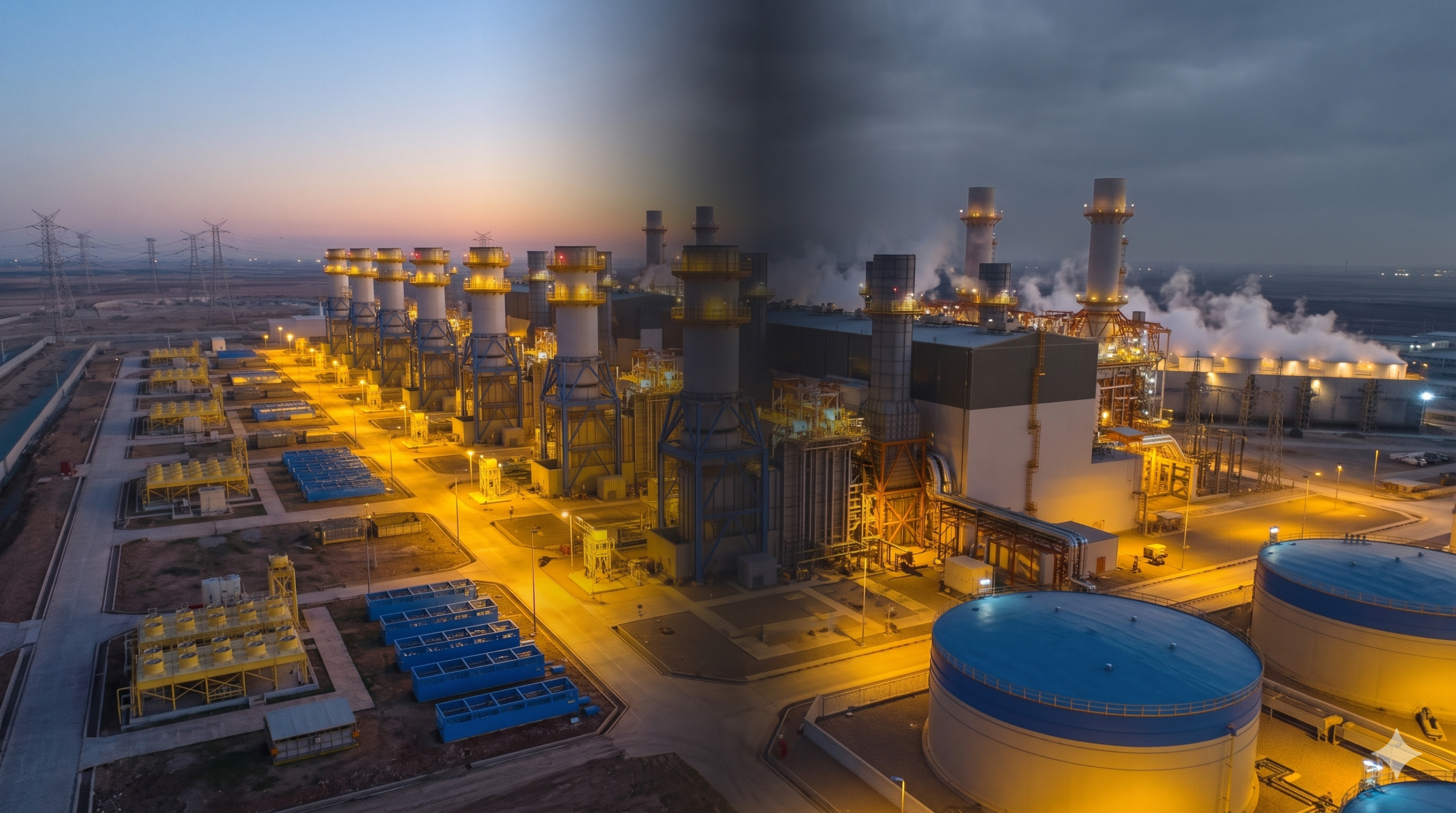
The Paradox of Power: Navigating Iraq’s Electricity Crisis and the Road to Stability
For decades, the standard soundtrack to an Iraqi summer has not been music, but the ambient, collective hum of thousands of neighborhood diesel generators. Despite sitting atop some of the world’s largest proven crude oil reserves, the Republic of Iraq remains locked in a chronic power crisis. Long hours of daily load shedding (rolling blackouts) disrupt daily life, stifle industrial productivity, and fuel public discontent.
Yet, Iraq’s electricity crisis is not simply a failure to build power plants. It is a highly complex web of infrastructure gaps, geopolitical dependencies, massive transmission waste, and a widening mismatch between available fuel and generating capacity.
The Current Landscape: Capacity vs. Reality
Iraq has made notable strides in expanding its nominal power infrastructure. The Iraqi Ministry of Electricity indicates that the country’s actual operational grid generation sits at roughly 28,000 to 29,000 Megawatts (MW).
However, during peak summer periods, when temperatures routinely cross 45°C (113°F) and air conditioning units run around the clock, baseline national demand spikes to an estimated 40,000 to 45,000 MW. Some projections even place absolute peak demand closer to 60,000 MW. This leaves a structural supply deficit of 12,000 to 15,000 MW, making scheduled load shedding an unavoidable mathematical certainty for the national grid (Al-Wataniya).
Plans, Pipelines, and Mega-Projects:
Under Construction & Approved Plans:
The 10,500 MW Expansion: The Iraqi Cabinet greenlit five massive power generation projects utilizing a 25-year Build-Own-Operate (BOO) investment model. These include three major Independent Power Producer (IPP) combined-cycle gas plants: Al-Faw (3,000 MW), Abu Ghraib (3,000 MW), and Kirkuk (1,500 MW), alongside thermal projects in Najaf (1,500 MW) and Youssifiyah (1,800 MW).
Strategic Global Partnerships: Deep strategic agreements are actively underway with international heavyweights like General Electric (GE Vernova) and Siemens Energy. These plans target adding up to 24,000 MW of new capacity via key plants like Mansouriya II, Hawija, and combined-cycle expansions in Dhi Qar and Samawah.
Medium to Long-Term Vision: The state aims to push total grid capacity to 48,000 MW by 2028, with an ultimate 20-year roadmap targeting the addition of 57,000 to 60,000 MW of cumulative capacity.
The Solar Pivot
Recognizing the dangers of monoculture fuel reliance, Iraq has stepped into utility-scale renewables. The country plans to generate 7,500 MW of solar power by 2030 through 15 specialized solar projects. Landmark steps include the gradual scaling up of the 300 MW Karbala solar plant, which recently began feeding its first megawatts into the national grid.
Why Does the Grid Still Fail? The Core Challenges:
If Iraq possesses nearly 29,000 MW of capacity and tens of thousands more in the pipeline, why do blackouts persist? The answers lie within four deep structural fractures:
1. The Fuel Supply Bottleneck and the Flaring Paradox:
Iraq’s modern power expansion has prioritized gas-fired power plants because they are cleaner and more efficient. However, domestic gas production has lagged far behind generation capacity.
Ironically, Iraq is the world’s third-largest practitioner of gas flaring, burning off the natural gas associated with oil extraction at the wellhead as waste. Iraq flares roughly 18 billion cubic meters of gas annually; if captured and treated, this wasted gas alone could power up to 33 GW of electricity. Because this gas is lost, Iraq relies heavily on natural gas imports from neighboring Iran to fuel up to 40% of its generation capacity.
2. Geopolitical and Macroeconomic Volatility:
Heavy structural reliance on external fuel leaves Iraq highly vulnerable to regional shocks. When political tensions fluctuate or technical disruptions occur, cross-border gas flows can suddenly plunge. This fuel instability severely compromises the state’s ability to maintain emergency purchases, directly exposing citizens to sudden drops in grid voltage.
3. A Fragile, Outdated Delivery Network:
Building a power plant is useless if the grid cannot carry the electricity to households. The Iraq Energy Institute estimates that between 30% and 50% of generated electricity is lost during transmission and distribution (T&D). Decades of war, damage from past conflicts, and aging power lines mean the physical grid cannot physically handle the full electrical load. Furthermore, a severe shortage of functioning distribution transformers and switchgear stations creates localized failures and grid bottlenecks.
4. Tariff and Revenue Collection Inefficiencies:
The economic model of Iraq’s power sector is fundamentally unsustainable. The government heavily subsidizes electricity, selling it far below the actual cost of generation. Compounding this, inadequate metering and widespread grid pilferage mean that the Ministry of Electricity historically collects only a fraction of the value of the power it delivers. This massive commercial loss strips the ministry of the capital required for routine maintenance, network reinvestment, and network modernization.
The Way Forward: How Iraq Can Overcome the Crisis:
To transition from temporary band-aids to a modern, self-sustaining energy ecosystem, Iraq must pursue a multi-pronged strategy:
STRATEGIC OVERHAUL OF IRAQI POWER:
- FUEL AUTONOMY:
- Capture associated Flared gas,
- Expand Akkas & free gas field.
- GRID REPAIR:
- Replace burned transformers,
- Rebuild T&D substations.
- COMMERCIAL REFORM:
- Install smart meters,
- Optimize tariff collection.
Accelerate Gas Capture Initiatives: Iraq’s fastest route to energy independence is converting environmental waste into power. Prioritizing projects that capture, process, and route associated oil-gas to domestic power stations will eliminate the need for expensive fuel imports and maximize the efficiency of existing gas turbines.
Reconstruct and Modernize the T&D Grid: Generating 50,000 MW is meaningless if half of it bleeds out into a broken network. Investment must be balanced equally between building new generation plants and systematically upgrading physical transmission lines, replacing damaged substations, and localizing transformer production.
Enforce Commercial Reform and Smart Metering: To curb soaring, unmanaged demand and build a self-funding grid, Iraq must implement robust billing, check grid pilferage, and introduce smart metering systems. Shifting toward progressive tariffs will encourage mindful consumption while providing the necessary revenue to maintain infrastructure.
Fortify Regional Interconnections: While domestic capacity matures, finalizing and stabilizing high-voltage grid interconnections with GCC neighbors, Jordan, and Turkey will provide a vital balancing mechanism to manage peak summer loads and insulate the country from sudden supply shocks.
CONCLUSION:
Iraq’s power crisis is not an unsolvable technical mystery; it is an infrastructure and management challenge awaiting sustained structural execution. By capitalizing on its current BOO investment models, aggressively capturing its flared gas resources, and modernizing its distribution grid, Iraq can finally silence the roar of street generators and power a stable, prosperous future.
#GlobalPowerNews #IraqEnergy #PowerSector #EnergyCrisis #Infrastructure #MiddleEastEnergy #Utilities #LoadShedding #PowerOutage #ElectricityCrisis #GasFlaring #RenewableEnergy #IraqSolar #PowerGeneration #GridModernization
Sources:
Iraqi Ministry of Electricity (Official Website)
https://moelc.gov.iqIraqi News Agency (INA) – Ministry of Electricity News
https://ina.iqWorld Bank – Iraq Country Overview
https://www.worldbank.org/en/country/iraqWorld Bank – Energy Sector
https://www.worldbank.org/en/topic/energyInternational Energy Agency (IEA)
https://www.iea.orgIEA – Middle East Energy
https://www.iea.org/regions/middle-eastInternational Renewable Energy Agency (IRENA)
https://www.irena.orgIRENA – Middle East and North Africa
https://www.irena.org/Regions/Middle-East-and-North-AfricaWorld Bank – Global Gas Flaring Reduction Partnership (GGFR)
https://www.worldbank.org/en/programs/gasflaringreductionGlobal Gas Flaring Tracker Report (World Bank)
https://www.worldbank.org/en/programs/gasflaringreduction/publication/global-gas-flaring-tracker-reportOrganization of the Petroleum Exporting Countries (OPEC) – Iraq
https://www.opec.orgSiemens Energy – Iraq Projects
https://www.siemens-energy.comGE Vernova – Iraq Energy Projects
https://www.gevernova.comTotalEnergies – Iraq Gas Growth Integrated Project (GGIP)
https://totalenergies.com/projects/iraq-gas-growth-integrated-projectMiddle East Economic Survey (MEES)
https://www.mees.comEnergy Intelligence
https://www.energyintel.comCIGRE – International Council on Large Electric Systems
https://www.cigre.orgIEEE Power & Energy Society
https://www.ieee-pes.orgInternational Finance Corporation (IFC) – Iraq Energy
https://www.ifc.orgUnited Nations Development Programme (UNDP Iraq)
https://www.undp.org/iraqUnited Nations Economic and Social Commission for Western Asia (ESCWA) – Energy
https://www.unescwa.orgReuters – Iraq Energy
https://www.reuters.com/world/middle-east/Associated Press – Iraq’s Utility-Scale Solar Programme
https://apnews.com/article/80c8e55b2231118e1521304d1eff40f8Iraq Energy Institute
https://iraqenergy.orgOxford Institute for Energy Studies (OIES)
https://www.oxfordenergy.org
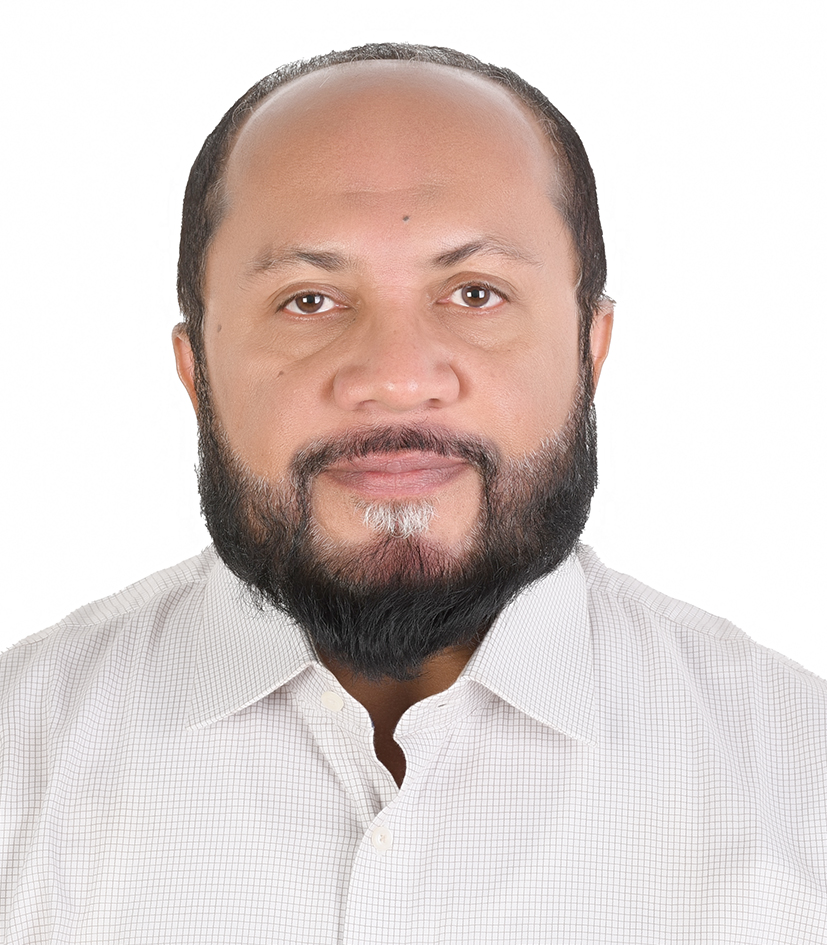
Nawaz Ali Lakho is a power-generation professional and project-management consultant with more than 33 years of experience across thermal, nuclear, gas-turbine, steam-turbine, and combined-cycle power plants. His career encompasses plant operations, maintenance, commissioning, troubleshooting, asset management, and the leadership of multidisciplinary teams of more than 200 personnel.
His hands-on experience includes GE Frame 9E and 6FA and Alstom GT13DM gas turbines; Mitsubishi, GE, and Fuji steam turbines; heat-recovery steam generators; supercritical boilers; and major plant-control platforms from GE, ABB, Emerson, and Siemens. He has participated in cold and hot commissioning, major overhauls, hot-gas-path inspections, and combustion inspections at power facilities ranging from 150 MW to 586 MW.
At Global Power News, Nawaz shares field-informed O&M case studies, technical guidance, equipment insights, and analysis of power systems and energy infrastructure. Connect with him on LinkedIn.
International Experience: Have worked around the world specially, Pakistan, Iraq, Saudi Arabia, UAE, Angola, England and Nigeria.
Disclaimer: Articles are developed using internet research, professional field experience, and AI assistance. While every effort is made to ensure accuracy, the content may contain estimates, projections, or assumptions. The author assumes no liability for technical or computational discrepancies.
Whenever I travel through airports and fellow Iraqis learn that I am a Power Industry professional, their very first question is always: ‘Why does Iraq still suffer from blackouts and load shedding?’ I have always deeply wanted to provide a meaningful answer to them. This article is my response to the Iraqi people.