
Unifying the Grid: The West African Power Pool (WAPP) and the Path to Regional Energy Security
The West African Power Pool (WAPP) represents one of the most ambitious cross-border infrastructure initiatives on the African continent. Established in 1999 under the auspices of the Economic Community of West African States (ECOWAS) and formalized with a permanent secretariat in Cotonou, Benin, in 2006, WAPP was created to solve a fundamental paradox: West Africa possesses immense, highly concentrated energy resources, yet it suffers from some of the lowest electrification rates and highest electricity tariffs in the world.
By integrating national power systems into a single, unified regional electricity market, WAPP aims to replace isolated, fragile national grids with a robust, interconnected network capable of providing a stable, reliable, and affordable power supply to millions.
1. The Architecture of the Network: Who is Connected?
The physical network of WAPP is traditionally divided into two primary zones that are undergoing a monumental shift toward complete integration:
- Zone 1 (The Eastern & Coastal Corridor): This block includes regional powerhouses like Nigeria, which acts as a primary stabilizing anchor with its massive gas-fired generation capacity, alongside Niger, Benin, and Togo.
- Zone 2 (The Western & Sahelian Corridor): This encompasses Ghana, Côte d’Ivoire, Burkina Faso, Mali, Senegal, and the nations of the CLSG network (Cote d’Ivoire, Liberia, Sierra Leone, and Guinea), alongside the OMVG network (comprising Senegal, The Gambia, Guinea, and Guinea-Bissau).
The Synchronization Milestone
For many years, these zones operated as isolated sub-systems, limiting real-time power transfers due to differing grid frequencies and voltage instabilities. However, WAPP has recently achieved historic technical breakthroughs:
- November 2025: WAPP successfully conducted its first-ever comprehensive synchronization test, seamlessly linking the power grids of all mainland West African nations together in a unified network for four continuous hours.
- Mid-2026 Milestone: The WAPP Information and Coordination Centre (ICC), alongside entities like the Nigerian Independent System Operator (NISO), is aggressively rolling out the second phase of regional grid synchronization. Full, permanent synchronization is scheduled to be operationalized to enable real-time, bidirectional power flow across the entire ECOWAS bloc.
2. Mutual Benefits: Leveraging Regional Energy Resources
An interconnected grid allows member states to move away from costly, small-scale national generation projects and instead leverage the natural, localized energy advantages of their neighbors:
REGIONAL ENERGY BALANCING
- NIGERIA & GHANA (Gas-Fired / Thermal): Constant baseload power, Stabilizes grid during droughts.
- GUINEA & MALI (Hydro): Seasonal clean energy, Replaces expensive HFO.
- SAHELIAN REGIONS (Burkina Faso / Niger): Exporting massive utility-scale Solar into the unified network.
Key Benefits Include:
- Resource Complementarity & Fuel Substitution: Nations with massive natural gas reserves (like Nigeria and Ghana) can export low-cost, gas-fired thermal baseload power to Sahelian nations (like Burkina Faso and Mali) that rely heavily on expensive, imported Heavy Fuel Oil (HFO) or Diesel. Conversely, Guinea’s immense hydropower potential (via projects like Souapiti and Fomi) can supply clean energy to the coastal corridor during peak periods.
- Grid Stability and Reserve Sharing: Smaller utilities with modest generation capacities, such as The Gambia (roughly 157 MW installed capacity), no longer need to maintain massive, expensive spinning reserves. If a major domestic generator trips, the interconnected network instantly absorbs the shock via cross-border reserve sharing.
- Economies of Scale for IPPs: A unified market allows Independent Power Producers (IPPs) to develop large-scale generation assets (e.g., 500+ MW combined-cycle gas turbine plants or utility-scale solar parks in the Sahel) because they are no longer restricted by the small size of a single country’s domestic market.
3. Current Status: Utilization vs. Structural Lacking
While the technical framework is rapidly maturing, the WAPP network operates in a delicate balance between high utilization and critical systemic constraints.
Utilization Successes
Cross-border power trading is an active reality. Côte d’Ivoire consistently exports power to Mali, Burkina Faso, and Liberia. Nigeria supplies reliable baseload power to Niger, Benin, and Togo. The operationalization of the WAPP-ICC has fundamentally improved the assessment of cross-border transfer capacities and coordinated exchange schedules.
Structural Deficiencies and Lack of Optimization
Despite these milestones, the regional grid faces severe bottlenecks:
- Suppressed Generation and Structural Deficits: The region experiences concurrent supply constraints, pushing several national grids into rolling load-shedding programs. This stems from a combination of sustained high demand (peaking well over 16,000 MW regionally), unexpected forced outages at major thermal stations, and seasonal low-water levels affecting hydropower output.
- Transmission Bottlenecks: While Nigeria has over 13,000 MW of installed capacity, transmission infrastructure constraints often restrict its effective domestic and export output to under 5,000 MW. The physical cross-border lines frequently operate at their thermal limits.
- Financial and Liquidity Distress: Many national utilities in West Africa are financially insolvent due to non-cost-reflective domestic tariffs and high transmission losses. This creates a circular debt crisis where importing utilities struggle to pay exporting countries on time.
4. Key Improvements Required to Optimize WAPP
To transform WAPP from a loose collection of interconnected lines into a highly dynamic, liquid electricity market, several interventions are critical:
A. Commercial and Regulatory Stabilization
- Establishment of the Revolving Liquidity Support Fund (FRSL): WAPP must fast-track this fund to act as a financial cushion. The FRSL guarantees payments to exporting utilities, minimizing the commercial risk of cross-border power purchase agreements (PPAs).
- Harmonized Transmission Tariffs: Finalizing the regional transmission pricing methodology via the ECOWAS Regional Electricity Regulatory Authority (ERERA) will ensure fair, transparent, and cost-reflective wheeling charges across transit countries.
B. Technical and Infrastructure Upgrades
- Advancing the 2019–2033 ECOWAS Master Plan: Investment must be accelerated into reinforcing high-voltage backbones, particularly upgrading major corridors to 330 kV or 400 kV extra-high voltage lines to minimize transmission line losses over long distances.
- Deployment of Advanced Grid Management Technology: Full operational integration requires implementing robust Security Information and Event Management (SIEM) systems alongside Supervisory Control and Data Acquisition (SCADA) networks managed by the WAPP-ICC to handle dynamic, real-time frequency stabilization across fifteen borders.
5. Expanding the Horizons: Connecting Neighboring Countries
To maximize the utilization of Africa’s diverse energy resources, WAPP should not remain isolated within ECOWAS borders. Strategic expansions into neighboring regions offer profound geopolitical and economic benefits.
Potential Interconnections and Strategic Benefits
1. Mauritania (The Sahelian Solar Link)
- The Concept: Although Mauritania is not an ECOWAS member, it shares strong ties via the OMVS (Senegal River Basin Development Organization). Connecting Mauritania directly into the WAPP Zone 2 backbone is highly logical.
- The Benefit: Mauritania possesses exceptional solar irradiance and vast land. It can develop massive solar farms to export clean, daytime energy to Senegal and Mali, allowing those countries to throttle back their thermal plants and conserve water in their hydroelectric dams for nighttime peak utilization.
2. Cameroon and Central Africa (The Inga/Hydropower Bridge)
- The Concept: Establishing an interconnector corridor from Nigeria eastward into Cameroon links WAPP with the Central African Power Pool (CAPP).
- The Benefit: Central Africa holds unparalleled hydropower potential, particularly in the Democratic Republic of Congo (Grand Inga) and Cameroon (Sanaga River). Connecting WAPP to CAPP creates a multi-regional energy superhighway. During periods of drought in West Africa, baseload hydro can flow from Central Africa to stabilize the WAPP network.
3. Morocco and the Maghreb Pool (The North African Corridor)
- The Concept: A long-term transmission corridor running from Morocco down through Mauritania into Senegal.
- The Benefit: This link bridges Sub-Saharan Africa with North Africa’s highly developed power market (and subsequently, Europe via existing Moroccan-Spanish interconnectors). It enables massive seasonal balancing, allowing West Africa to export surplus power during high-rain seasons and import power from North Africa’s vast solar and wind projects during the dry season.
Conclusion The West African Power Pool is no longer just a theoretical concept; it is a rapidly maturing, synchronized super-grid. The technical milestones achieved ahead of the mid-2026 targets prove that regional grid integration is achievable. By aggressively addressing infrastructure bottlenecks, ensuring liquidity through market reforms like the FRSL, and expanding interconnections outward toward Mauritania, Central, and North Africa, WAPP can unlock true regional energy independence, fueling industrial growth and delivering reliable electricity to millions of citizens.
Sources:
West African Power Pool (WAPP) – Official Website
https://www.ecowapp.orgWAPP – About the Organization
https://www.ecowapp.org/en/about-usWAPP – Publications and Documentation Centre
https://www.ecowapp.org/en/documentationECOWAS – West African Power Pool
https://www.ecowas.intECOWAS Regional Electricity Regulatory Authority (ERERA)
https://www.erera.arrec.orgWorld Bank – Connecting West Africa through Regional Power Integration and Expanded Electricity Access
https://www.worldbank.org/en/results/2026/05/11/connecting-west-africa-through-regional-power-integration-and-expanded-electricity-accessWorld Bank – West Africa Regional Electricity Market Program (WA-REMP)
https://www.worldbank.org/en/news/press-release/2025/01/24/enhancing-regional-power-trade-and-energy-access-in-west-africaAfrican Development Bank – Energy Sector
https://www.afdb.org/en/topics-and-sectors/sectors/energyProgramme for Infrastructure Development in Africa (PIDA)
https://www.au-pida.orgInternational Energy Agency (IEA) – Africa Energy Outlook
https://www.iea.org/reports/africa-energy-outlookInternational Renewable Energy Agency (IRENA) – Africa
https://www.irena.org/Regions/AfricaCIGRE (International Council on Large Electric Systems)
https://www.cigre.orgIEEE Power & Energy Society (IEEE PES)
https://www.ieee-pes.orgScienceDirect – Sustainable Development of the West African Power Pool: Increasing Solar Energy Integration and Regional Electricity Trade
https://www.sciencedirect.com/science/article/pii/S0973082618300590ScienceDirect – Are West Africa’s Policy, Planning, and Regulatory Frameworks Missing the Harmonization Piece of the Power Pooling–Renewable Energy Puzzle?
https://www.sciencedirect.com/science/article/pii/S0301421524001812USAID – West Africa Regional Economic Bulletin (WAPP Grid Synchronization)
https://www.usaid.gov/sites/default/files/2023-08/REGO-Newsletter-July-2023.pdfWAPP – Historic Synchronization Test of the West African Power Grid
https://www.ecowapp.org/en/news/historic-synchronization-test-west-african-power-grid-major-milestone-achieved-wappWAPP – Regional Electricity Market Integration
https://www.ecowapp.org/en/news/relp-and-wapp-partner-advance-west-africas-regional-electricity-market-integration
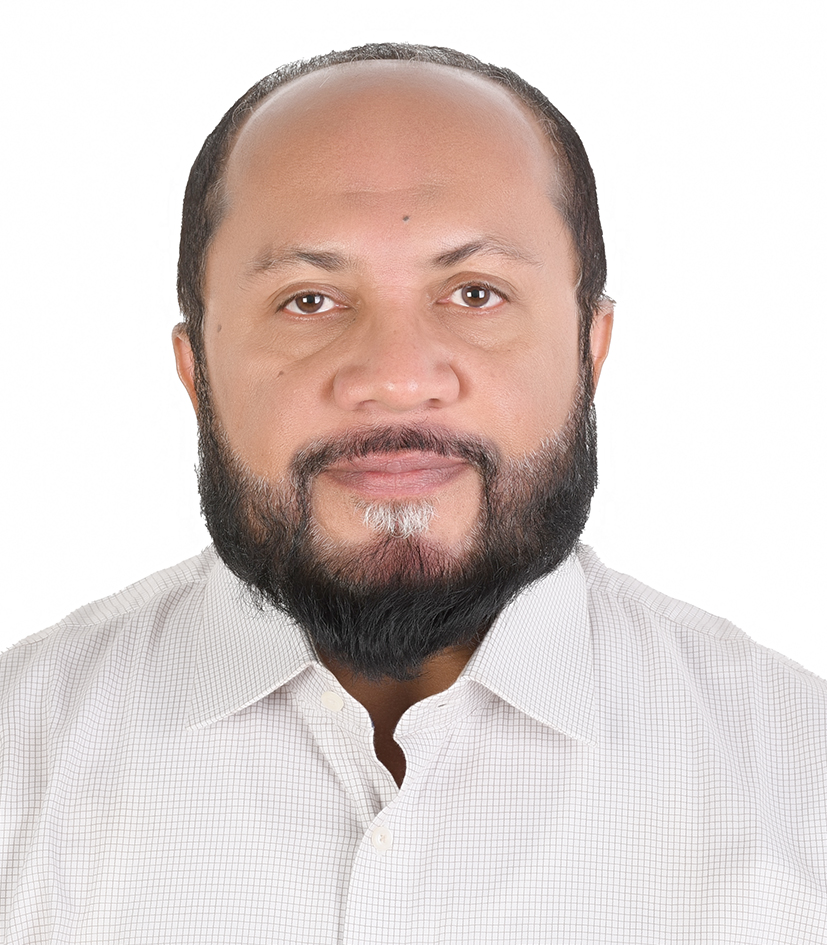
Nawaz Ali Lakho is a power-generation professional and project-management consultant with more than 33 years of experience across thermal, nuclear, gas-turbine, steam-turbine, and combined-cycle power plants. His career encompasses plant operations, maintenance, commissioning, troubleshooting, asset management, and the leadership of multidisciplinary teams of more than 200 personnel.
His hands-on experience includes GE Frame 9E and 6FA and Alstom GT13DM gas turbines; Mitsubishi, GE, and Fuji steam turbines; heat-recovery steam generators; supercritical boilers; and major plant-control platforms from GE, ABB, Emerson, and Siemens. He has participated in cold and hot commissioning, major overhauls, hot-gas-path inspections, and combustion inspections at power facilities ranging from 150 MW to 586 MW.
At Global Power News, Nawaz shares field-informed O&M case studies, technical guidance, equipment insights, and analysis of power systems and energy infrastructure. Connect with him on LinkedIn.
International Experience: Have worked around the world specially, Pakistan, Iraq, Saudi Arabia, UAE, Angola, England and Nigeria.
Disclaimer: Articles are developed using internet research, professional field experience, and AI assistance. While every effort is made to ensure accuracy, the content may contain estimates, projections, or assumptions. The author assumes no liability for technical or computational discrepancies.