
The Syria Energy Outlook: Government Reforms, Foreign Billion-Dollar Pacts, and the Long Road to a Stable Grid
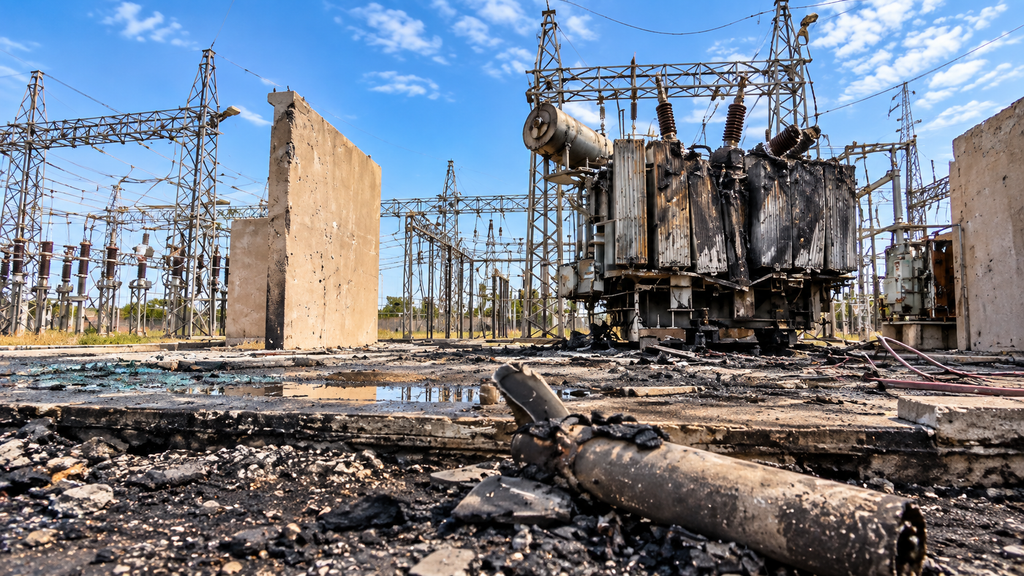
Following the monumental political shift in late 2024 marked by the fall of the Assad regime and the installation of the transitional government led by President Ahmad al-Sharaa Syria has entered a critical phase of reconstruction.
At the center of this rebirth is the power industry. After nearly 14 years of civil war, heavy sanctions, and severe underinvestment, the grid was left deeply degraded. However, the lifting and easing of Western sanctions in 2025 has triggered a swift, multi-billion-dollar effort to rebuild Syria’s energy landscape.
1. The Present Situation of Syria’s Power Industry
For years, the average Syrian lived with a collapsed grid, receiving as little as 1 to 2 hours of state electricity per day and relying entirely on expensive, noisy private diesel generators. Today, the situation is improving but remains fragile.
- Supply and Rationing: Thanks to emergency measures, electricity availability in major urban centers has improved to roughly 6 to 12 hours per day. However, rural areas still suffer from severe, rolling blackouts.
- Infrastructure Deficit: Much of Syria’s transmission network, transformers, and power plants are physically damaged. Local residents in heavily war-torn sectors have frequently resorted to running improvised lines from roadside transformers, creating severe safety risks and overloads.
- The Cost Shock: To make the network sustainable and attract foreign capital, the government introduced a tiered pricing system. In early 2026, many consumers saw their electricity bills spike by over 600%, moving Syria rapidly away from state-subsidized power. While this is tough on citizens’ pockets, officials view it as a necessary step to fund grid maintenance.
2. Government Efforts to Overcome the Crisis
The transitional administration has designated the energy sector as its primary engine for diplomatic reintegration and economic recovery.
Transition to Private Investment
The state lacks the financial capacity to buy basic grid hardware (like electrical meters), let alone rebuild power plants. Consequently, the government has aggressively pivoted toward Public-Private Partnerships (PPPs), offering highly lucrative contracts to international developers.
Unifying the Energy Supply
Historically, Syria’s primary oil- and gas-producing regions in the northeast were separated from government-controlled regions. The administration is working to fully reintegrate national infrastructure and boost domestic gas production, primarily in Homs province, which is projected to increase by 50% in the near term. This gas will directly feed domestic power stations to reduce reliance on expensive diesel.
Administrative Reforms
To reassure international investors, the government has reformed its energy management structure. New regulations balance the power of state bodies like the Syrian Petroleum Company (SPC), moving toward collective management to curb corruption and streamline contract approvals.
3. Help and Investment from “Friendly” Countries
The geopolitical alignment regarding who helps Syria has changed dramatically. While the previous regime relied strictly on Iran and Russia, the current administration has rapidly diversified its partnerships, drawing heavy interest from both Western and regional powers.
| Country / Partner | Type of Assistance & Key Projects |
| United States | Corporate Deals: Following sanctions relief, major U.S. firms have returned. On June 16, a landmark gas development deal was signed with ConocoPhillips and Novaterra Energy to boost fuel for power plants. Discussions are also underway with Chevron and GE. |
| Qatar | Infrastructure Funding: Qatar’s UCC Holding signed a $7 billion investment agreement covering electricity generation, renewable energy projects, and core infrastructure. Qatar also provided floating power stations (powerships) for immediate grid support. |
| Türkiye | Grid Connection & Power Supply: Türkiye is actively connecting its domestic electricity grid across the border into Syria. Alongside Qatar, Ankara has deployed floating power barges to provide immediate electricity to coastal and northern zones. |
| Germany | Technology & Equipment: Germany selected Syria as its partner country for the Arab-German Economic Forum. Syria’s Ministry of Energy signed a Memorandum of Understanding with Siemens Energy to reserve production capacity for advanced gas turbines and generation equipment. |
| Arab Gulf States | Fuel & Logistics: Saudi Arabia and the UAE have re-engaged economically, facilitating emergency fuel imports to stabilize power generation while long-term infrastructure is built. |
| European Union | Renewable Focus: The EU is actively exploring funding frameworks to expand Syria’s local solar power capabilities and is evaluating long-term plans to integrate Syria into the European energy market via subsea cables through Cyprus and Greece. |
What About Former Allies?
Iran and Russia have seen their influence dramatically curbed. In an effort to maintain diplomatic leverage, Iran has offered to negotiate dropping the $30 billion to $50 billion debt owed by the previous regime, but Damascus is firmly prioritizing new partnerships with the West, Türkiye, and the Gulf.
The Bottom Line: Syria’s energy potential is massive, with target agreements valued as high as $28 billion to completely revitalize the grid. While the days of total blackouts are fading, the transition from emergency foreign aid to a fully stable, self-sufficient national grid will take several years of intense construction.
Sources:
World Bank – Syria Electricity Emergency Project: US$146 Million Grant
https://www.worldbank.org/en/news/press-release/2025/06/25/syria-world-bank-us-146-million-grant-to-improve-electricity-supply-and-support-sector-development
Use this for grid damage, electricity-sector recovery, transmission rehabilitation, transformer substations, institutional reform, and financing. World Bank – Syria Electricity Emergency Project appraisal document
https://documents1.worldbank.org/curated/en/099061125140013933/pdf/BOSIB-6d8f7a5d-6bf0-4d8f-a33c-78cb2338ab7f.pdf
This is particularly useful for the claim that grid electricity had been limited to roughly 2–4 hours per day on average, rather than for asserting a nationwide improvement to 6–12 hours. World Bank – Syria country overview
https://www.worldbank.org/ext/en/country/syria
Use for Syria’s reconstruction context, economic recovery, infrastructure needs, and World Bank engagement. World Bank – Syria Electricity Emergency Project implementation report
https://documents1.worldbank.org/curated/en/099010226093041943/pdf/P511407-e82e1772-3403-4fe4-aa95-88a357a907cc.pdf
Use for current implementation status, the US$146 million financing amount, and the role of the Public Establishment for Transmission and Distribution of Electricity. UNDP – Syria electricity and recovery assessment
https://www.undp.org/syria/blog/crisis-recovery-securing-peace-and-stability-syria-and-beyond
This supports the statement that many Syrians had access to only around two hours of nationally supplied electricity per day. UNDP – Deir Ali Power Plant rehabilitation
https://www.undp.org/syria/press-releases/undp-signs-us107-million-agreement-italy-and-norway-boost-electricity-supply-syria
Use for the US$10.7 million Italy–Norway-supported rehabilitation programme and restoration of more than 120 MW at Deir Ali. UNDP – Jandar Power Plant rehabilitation
https://www.undp.org/syria/press-releases/japan-and-undp-launch-us124-million-project-stabilise-electricity-supply-jandar-power-plant-syria
Use for the US$12.4 million Japanese-supported maintenance project and its role in sustaining up to 540 MW. UNDP – Qatar-supported natural-gas supply to Deir Ali
https://www.undp.org/syria/press-releases/qatar-provides-reliable-natural-gas-supplies-syria-critical-improving-electricity-supply
Use for Qatar’s emergency gas assistance and the associated 400 MW of generation at Deir Ali. This is stronger than the article’s unsupported statement about Qatari powerships. UNDP – Renewable Energy Master Plan for Syria
https://www.undp.org/arab-states/press-releases/driving-sustainable-energy-transformation-norway-and-undp-support-development-renewable-energy-master-plan-syria
Use for renewable-energy planning and institutional reform, rather than speculative claims about integration with Europe through subsea cables. UNDP Syria Annual Report 2025
https://www.undp.org/syria/publications/undp-syria-annual-report-2025
Use for broader recovery, electricity restoration, essential services, and institutional support. UCC Holding – Official announcement of the US$7 billion Syria power agreement
https://uccholding.com/media/read/78
This is the primary source for the May 29, 2025 memorandum covering major generation projects led by UCC Holding. UCC Holding – Project scope: 4,000 MW CCGT plus 1,000 MW solar
https://www.uccholding.com/media/read/ucc-holding-received-the-energy-infrastructure-project-of
Use for the specific configuration of four combined-cycle plants totalling 4,000 MW and a 1,000 MW solar project. Associated Press – Syria’s 5,000 MW energy agreement
Use as independent confirmation that the consortium includes Qatari, Turkish, and American companies and that the proposal comprises 4,000 MW of combined-cycle gas generation and 1,000 MW of solar capacity. U.S. Treasury – Initial sanctions relief for Syria, May 23, 2025
https://home.treasury.gov/news/press-releases/sb0148
Use for the issuance of General License 25 and the opening of transactions and investment activity. U.S. Treasury – Termination of the Syria sanctions programme, June 30, 2025
https://home.treasury.gov/news/press-releases/sb0183
This is the better source for stating that the United States subsequently terminated the broad Syria sanctions programme while retaining targeted measures. Council of the European Union – Lifting of economic sanctions on Syria
https://www.consilium.europa.eu/en/press/press-releases/2025/05/28/syria-eu-adopts-legal-acts-to-lift-economic-sanctions-on-syria-enacting-recent-political-agreement/
Use for the EU decision to lift economic restrictions while retaining security-related and targeted measures. Council of the European Union – Current Syria sanctions policy
https://www.consilium.europa.eu/en/policies/syria/
Use to explain that sanctions connected with security concerns, former-regime figures, and human-rights abuses were not all removed. European Union Publications Office – Syria’s electricity sector after a decade of war
https://op.europa.eu/en/publication-detail/-/publication/74ee981a-11e1-11ec-b4fe-01aa75ed71a1/language-en
Use for historical generation capacity, war damage, fuel shortages, transmission losses, and institutional challenges. International Energy Agency – Middle East energy analysis
https://www.iea.org/regions/middle-east
Use for regional fuel markets, electricity-sector trends, natural-gas dependence, and energy-security context. International Renewable Energy Agency – Middle East and North Africa
https://www.irena.org/Regions/Middle-East-and-North-Africa
Use for solar-resource potential, renewable-energy planning, investment conditions, and grid integration. United Nations Economic and Social Commission for Western Asia – Energy
https://www.unescwa.org
Use for regional electricity integration, reconstruction policy, energy governance, and socioeconomic analysis. CIGRE
https://www.cigre.org
Use for technical claims involving transmission-system restoration, grid stability, substations, system protection, and interconnection planning. IEEE Power & Energy Society
https://www.ieee-pes.org
Use for general technical explanations of grid reconstruction, metering, distribution losses, system operation, and power-market reform.
Nawaz Ali Lakho is a power-generation professional and project-management consultant with more than 33 years of experience across thermal, nuclear, gas-turbine, steam-turbine, and combined-cycle power plants. His career encompasses plant operations, maintenance, commissioning, troubleshooting, asset management, and the leadership of multidisciplinary teams of more than 200 personnel.
His hands-on experience includes GE Frame 9E and 6FA and Alstom GT13DM gas turbines; Mitsubishi, GE, and Fuji steam turbines; heat-recovery steam generators; supercritical boilers; and major plant-control platforms from GE, ABB, Emerson, and Siemens. He has participated in cold and hot commissioning, major overhauls, hot-gas-path inspections, and combustion inspections at power facilities ranging from 150 MW to 586 MW.
At Global Power News, Nawaz shares field-informed O&M case studies, technical guidance, equipment insights, and analysis of power systems and energy infrastructure. Connect with him on LinkedIn.
International Experience: Have worked around the world specially, Pakistan, Iraq, Saudi Arabia, UAE, Angola, England and Nigeria.
Disclaimer: Articles are developed using internet research, professional field experience, and AI assistance. While every effort is made to ensure accuracy, the content may contain estimates, projections, or assumptions. The author assumes no liability for technical or computational discrepancies.