
Syria’s Power Sector: Rebuilding an Energy Landscape
Following more than a decade of severe infrastructural degradation, Syria’s domestic power grid is undergoing its most significant structural evolution. The state-centralized model managed by the Ministry of Electricity is transitioning rapidly into an integrated Public-Private Partnership (PPP) and Independent Power Producer (IPP) framework. This paradigm shift aims to overcome the loss of an estimated 70% of pre-war generation capacity due to conflict damage, looting, and critical shortages of natural gas and fuel oil.
Current Landscape & Rehabilitation:
While historical utility backbones like Aleppo Thermal, Zayzoun, and Deir Ezzor remain largely or entirely out of service due to structural damage, strategic stabilization has been achieved through localized restoration efforts. Key assets—including the 1,100 MW Jandar Combined-Cycle Gas Turbine (CCGT) plant and the Deir Ali facility—have been partially modernized and brought back online through technical partnerships with regional allies like Iran’s MAPNA Group.
The $7 Billion Mega-Expansion:
The definitive turning point for the network centers on a landmark $7 billion, 5,000 megawatt utility expansion signed under long-term concessions with an international consortium. Spearheaded by Qatar’s UCC Holding (Urbacon) and backed by Power International (USA), alongside Turkish industrial giants Cengiz Energy and Kalyon G.I.S. Energy, this program is actively deploying a mix of high-efficiency gas and renewable assets.
The upcoming project pipeline includes:
- 4,000 MW of CCGT Thermal Generation: Spanning major installations at North Aleppo (1,200 MW), Deir Ezzor (1,000 MW), Zayzoun (1,000 MW), and Mhardeh (800 MW).
- 1,000 MW of Utility-Scale Solar PV: Distributed across strategic solar parks in Aleppo, Homs, Deir Ezzor, and Widian Al-Rabee to diversify the country’s energy mix.
Outlook: Backed by strategic technical agreements with Siemens Energy and localized supply chains (including gas field expansion partnerships with Saudi Arabia’s ADES), this private consortium model represents the first time international IPP infrastructure will fully control and supply bulk power back to Syria’s national grid. Coupled with the $146 million international Electricity Emergency Project (SEEP) targeting the 400 kV transmission lines, these developments plan to effectively double Syria’s current energy output, laying the groundwork for industrial and macroeconomic recovery.
Following years of severe geopolitical instability, underinvestment, and infrastructural damage, Syria’s electrical grid is experiencing a major transition. The country’s power infrastructure, historically dependent on public execution under the Ministry of Electricity and the Public Establishment for Electricity Generation (PEEG), is seeing a structural shift toward the first major integrated Public-Private Partnerships (PPPs) and Independent Power Producer (IPP) frameworks.
With recent geopolitical alignments in the region, massive international consortia involving Qatari, Turkish, Saudi, and European players are stepping in alongside state initiatives to rehabilitate, restore, and expand Syria’s damaged grid.
1. Existing Traditional & Damaged Power Stations
Before the conflict, Syria possessed an installed capacity of roughly 9,000 MW, though actual generated output dropped significantly due to localized damage and acute shortages of natural gas and fuel oil (mazout). The following assets represent the historic backbone of the Syrian grid, showing varying degrees of damage, partial operations, or complete decommissioning:
| Power Station | Type | Pre-War/Design Capacity | Current Operational Status & Notes |
| Aleppo Thermal | Fuel Oil / Gas | 1,065 MW | Severe structural damage during the conflict. Decommissioned for major overhaul; being replaced/absorbed by new initiatives. |
| Zayzoun (Idlib/Hama) | Gas Turbine | 487 MW | Extensively looted and structurally destroyed. Completely out of service. |
| Mhardeh (Hama) | Fuel Oil / Gas | 660 MW | Sustained heavy artillery damage and technical degradation. Barely operational or entirely offline. |
| Al-Zara (Hama) | Steam / Gas | 660 MW | Suffered localized attacks, operating at highly restricted, minimal emergency capacity. |
| Baniyas (Tartus) | Steam / Gas | 680 MW | Aged asset requiring severe maintenance; operating well below capacity due to technical degradation. |
| Tishreen (Damascus) | Steam / Gas | 800 MW | Heavily affected by fuel shortfalls and component damage; partially active but unstable. |
| Deir Ezzor | Gas Turbine | 400 MW | Severely damaged during regional fighting. Out of service. |
| Euphrates / Tabqa Dam | Hydroelectric | 800 MW | Compromised by technical failures, regional water-flow disputes, and control shifts. Operating minimally. |
| Baath & Tishreen Dams | Hydroelectric | ~400 MW (Combined) | Highly restricted output due to poor water flow from upstream flows. |
2. Restored & Modernized Power Stations
A targeted push by state technicians, backed heavily by Russian and Iranian technical teams, has successfully brought several strategic plants back online or partially modernized them to stabilize the basic emergency grid.
- Jandar Power Station (Homs – 1,100 MW CCGT):
- Status: Restored to stable operational capacity.
- O&M / Contractors: Heavily supported by Iranian engineering firms (MAPNA Group) via localized service contracts to supply parts and rebuild gas turbines.
- Deir Ali Power Station (Damascus – 750 MW / Expanded):
- Status: The most modern pre-war plant, Deir Ali suffered targeted grid attacks but has been successfully restored as the central stabilizer for the southern network.
- Contractors: Repaired with international parts sourcing and local state-backed technical teams.
- Nasrieh Power Station (Damascus – 350 MW Gas):
- Status: Partially restored to service via domestic rehabilitation funds, using available gas lines to run single-cycle emergency output.
3. New & Active IPP (Independent Power Producer) Stations
The emergence of Independent Power Producers (IPPs) and public-private structures is a recent development aimed at bypassing public fiscal constraints.
- Al-Sinn Solar IPP (Latakia/Tartus region): Small-to-medium commercial scale solar initiatives funded by domestic private industrial groups to feed localized industrial cities (e.g., Adra and Hassia industrial zones).
- The Hassia Private Industrial Grid: While small in comparison to utility plants, a series of micro-IPP licenses have been granted to private operators using heavy fuel oil generators and rooftop solar configurations to power manufacturing directly outside the state rationing system.
4. Upcoming Future Power Stations (The $7 Billion Expansion)
The largest structural evolution in Syria’s modern energy history was cemented via massive, multi-billion-dollar concession agreements signed under public-private partnership models. A dominant international consortium is spearheading an aggressive build-and-operate program to install 5,000 MW of combined natural gas and solar capacity.
Natural-Gas-Fired Combined-Cycle Power Plants (4,000 MW Total)
These mega-projects are structured to replace or completely rebuild destroyed assets with high-efficiency technology:
- North Aleppo Power Plant (1,200 MW): Brand new combined-cycle facility targeting the industrial recovery of northern Syria.
- Deir Ezzor Power Plant (1,000 MW): A complete utility-scale reconstruction in the eastern energy corridor.
- Zayzoun Power Plant (1,000 MW): Total greenfield/rebuild project to restore the lost capacity of the old Zayzoun grid.
- Mhardeh Power Plant (800 MW): High-efficiency replacement of the degraded Hama asset.
Utility-Scale Solar Photovoltaic Projects (1,000 MW Total)
Four strategic solar parks are being deployed to diversify Syria’s energy mix away from total fuel dependency:
- Widian Al-Rabee Solar (200 MW)
- Deir Ezzor Solar (300 MW)
- Aleppo Solar (300 MW)
- Homs Solar (200 MW)
Project Ecosystem: Investors, EPC, and O&M
The Public-Private Partnership Structure
The Ministry of Energy and the Public Establishment for Transmission and Distribution of Electricity have shifted to long-term concession models to ensure international legal protections for developers.
- Lead Consortium & Key Investors:
- UCC Holding (Urbacon Holding / Urbacon Concessions Investment), A major international contracting conglomerate based in Qatar.
- Power International (USA / Global), Providing strategic positioning and investment backing.
- Kalyon G.I.S. Energy & Cengiz Energy (Türkiye), Dominant Turkish industrial and energy infrastructure conglomerates.
- EPC (Engineering, Procurement, and Construction) Companies:
- The primary build-out is executed natively by the engineering arms of UCC Holding and Cengiz Energy, utilizing expedited fast-track schedules for phased commissioning.
- Siemens Energy entered into a strategic Memorandum of Understanding (MOU) and capacity reservation agreement to provide underlying generation technology and grid modernization systems.
- O&M (Operations & Maintenance) Structure:
- Under the final concession terms, special purpose project companies (SPVs) formed by Urbacon Concessions Investment and its Turkish partners (Cengiz/Kalyon) hold long-term operation rights to sell power back to the national grid under Power Purchase Agreements (PPAs).
- Fuel & Supply Line Partners:
- The gas plants rely on newly established regional dynamics, including gas supply agreements via SOCAR (Azerbaijan) utilizing the Kilis–Aleppo pipeline corridor, and LNG/natural gas frameworks facilitated by Qatari networks routed through regional infrastructure.
5. Grid Modernization and Emergency Rehabilitation
Complementing the major generation projects, international funding is flowing into the transmission backbone to make sure this new power can actually reach cities:
- The Syria Electricity Emergency Project (SEEP): Backed by a $146 million international development grant, this project focuses entirely on rehabilitating high-voltage transmission networks, fixing damaged transformer substations, and reconstructing critical 400 kV interconnectors to restore stable regional power lines connecting Syria to Jordan and Türkiye.
Sources
World Bank – Syria Electricity Emergency Project (SEEP)
https://www.worldbank.org/en/news/press-release/2025/06/25/syria-world-bank-us-146-million-grant-to-improve-electricity-supply-and-support-sector-developmentWorld Bank – Energy Program
https://www.worldbank.org/en/topic/energyUNDP Syria – Electricity Sector Rehabilitation
https://www.undp.org/syriaUNDP – Deir Ali Power Plant Rehabilitation Project
https://www.undp.org/syria/press-releases/undp-signs-us107-million-agreement-italy-and-norway-boost-electricity-supply-syriaEuropean Union – Syria’s Electricity Sector After a Decade of War: A Comprehensive Assessment
https://op.europa.eu/en/publication-detail/-/publication/74ee981a-11e1-11ec-b4fe-01aa75ed71a1/language-enInternational Energy Agency (IEA)
https://www.iea.orgIEA – Middle East Energy
https://www.iea.org/regions/middle-eastInternational Renewable Energy Agency (IRENA)
https://www.irena.orgIRENA – Renewable Energy in the Middle East
https://www.irena.org/Regions/Middle-East-and-North-AfricaSiemens Energy – Middle East Power Generation
https://www.siemens-energy.comMAPNA Group – Power Plant Projects
https://en.mapnagroup.comGeneral Establishment for Electricity Transmission and Distribution (Syria)
https://moe.gov.sy(or the official Ministry of Energy/Ministry of Electricity website, depending on the current government structure)Ministry of Energy – Syrian Arab Republic
https://moe.gov.syUnited Nations Economic and Social Commission for Western Asia (UNESCWA) – Energy
https://www.unescwa.orgWorld Bank – Infrastructure Recovery in Syria
https://www.worldbank.org/en/country/syriaAsian Infrastructure Investment Bank (AIIB) – Infrastructure and Energy
https://www.aiib.orgCIGRE – International Council on Large Electric Systems
https://www.cigre.orgIEEE Power & Energy Society
https://www.ieee-pes.orgEnergy Policy (ScienceDirect) – Middle East Electricity Infrastructure
https://www.sciencedirect.com/journal/energy-policyInternational Journal of Electrical Power & Energy Systems
https://www.sciencedirect.com/journal/international-journal-of-electrical-power-and-energy-systems
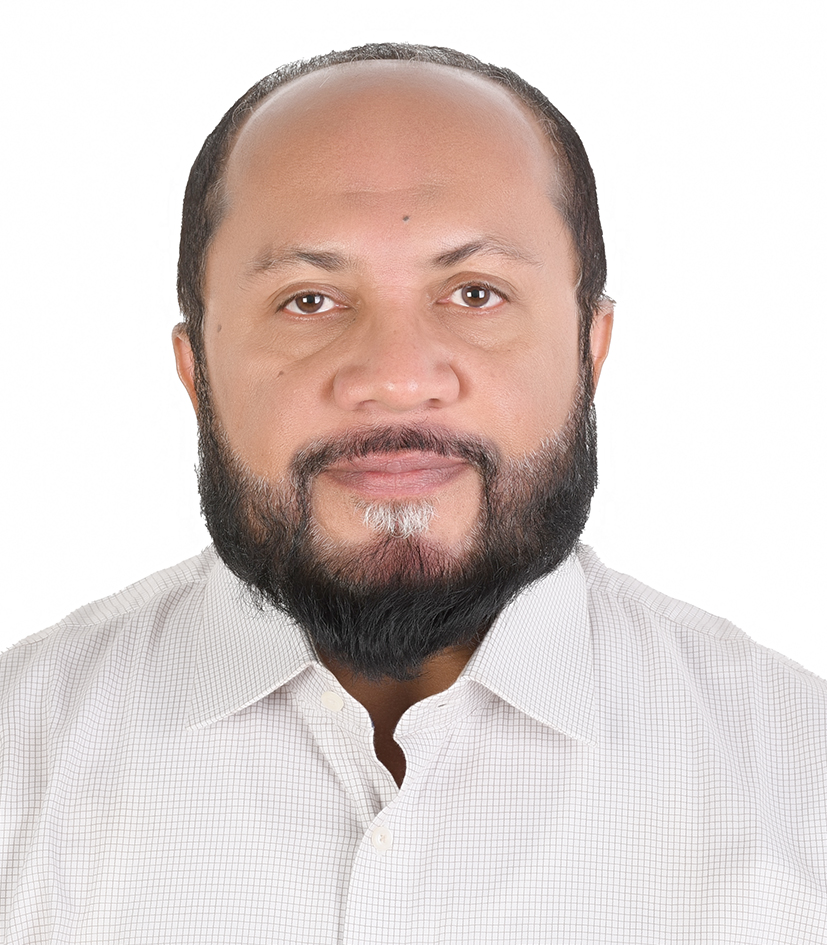
Nawaz Ali Lakho is a power-generation professional and project-management consultant with more than 33 years of experience across thermal, nuclear, gas-turbine, steam-turbine, and combined-cycle power plants. His career encompasses plant operations, maintenance, commissioning, troubleshooting, asset management, and the leadership of multidisciplinary teams of more than 200 personnel.
His hands-on experience includes GE Frame 9E and 6FA and Alstom GT13DM gas turbines; Mitsubishi, GE, and Fuji steam turbines; heat-recovery steam generators; supercritical boilers; and major plant-control platforms from GE, ABB, Emerson, and Siemens. He has participated in cold and hot commissioning, major overhauls, hot-gas-path inspections, and combustion inspections at power facilities ranging from 150 MW to 586 MW.
At Global Power News, Nawaz shares field-informed O&M case studies, technical guidance, equipment insights, and analysis of power systems and energy infrastructure. Connect with him on LinkedIn.
International Experience: Have worked around the world specially, Pakistan, Iraq, Saudi Arabia, UAE, Angola, England and Nigeria.
Disclaimer: Articles are developed using internet research, professional field experience, and AI assistance. While every effort is made to ensure accuracy, the content may contain estimates, projections, or assumptions. The author assumes no liability for technical or computational discrepancies.